The method decides the price, the durability and whether your design is even possible. Here is what each one is genuinely good at.
Screen printing
Ink is pushed through a mesh screen onto the fabric, one screen per colour. Making the screens is a fixed cost, so screen printing is expensive on small runs and very economical on large ones.
- Best for: larger quantities with a design in a limited number of colours.
- Durability: excellent. Survives repeated washing well.
- Limitation: priced per colour, so a photographic design becomes uneconomical.
DTF transfer
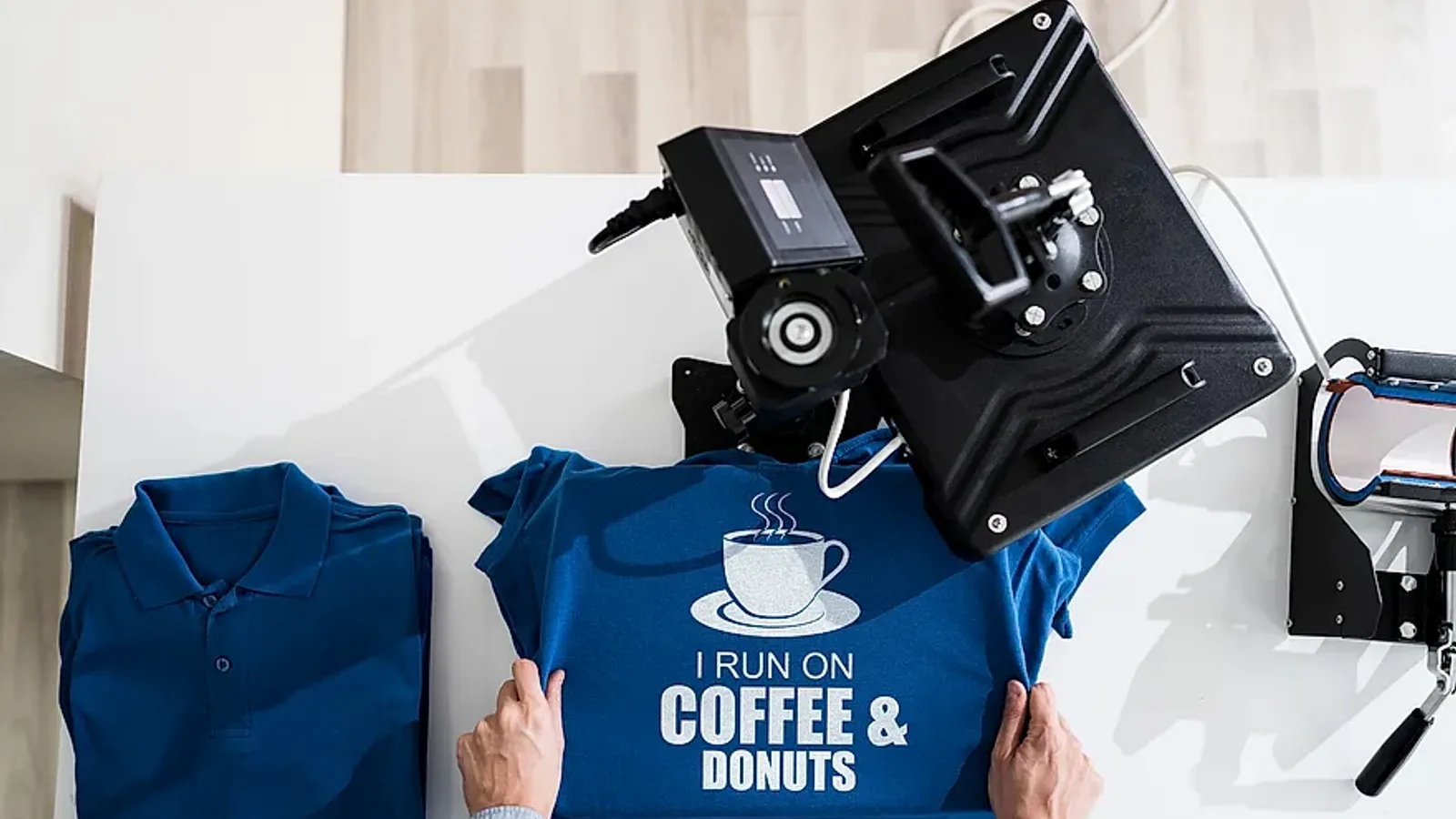
The design is printed onto a film and heat-pressed onto the garment. There is no per-colour setup, which makes full-colour and photographic artwork viable at any quantity.
- Best for: small quantities, full-colour artwork, gradients and photographs.
- Durability: good with proper care — wash inside out, avoid a hot iron directly on the print.
- Limitation: the print sits on the fabric rather than in it, so it has a slight feel to it.
Sublimation
Heat turns the ink into a gas that bonds into polyester fibres. The print becomes part of the fabric, which means it cannot crack, peel or fade at the edges.
- Best for: polyester sportswear, dry-fit team kit, all-over designs.
- Durability: the best of any method — there is no layer to come off.
- Limitation: works only on polyester, and only well on light colours.
Embroidery
The design is stitched into the fabric. Your logo has to be digitised into stitch instructions first, which is a one-time cost that is retained for reorders.
- Best for: polos, caps, jackets and formal uniforms.
- Durability: outlasts the garment. Nothing to crack or fade.
- Limitation: fine detail and small text lose definition in thread; large designs get expensive.
Choosing quickly
| Small quantity, full colour | DTF transfer |
|---|---|
| Large quantity, simple design | Screen printing |
| Polyester sportswear | Sublimation |
| Corporate polo or cap | Embroidery |
| Names and numbers on team kit | Heat transfer vinyl, usually combined with a screen-printed main design |
Fabric matters as much as method
A very light fabric feels thin immediately and undermines the whole point of a branded garment. Around 180 GSM cotton is a sensible floor for anything you want people to actually wear. Dry-fit polyester is the right choice for sport and outdoor work, where cotton holds sweat and becomes heavy.
Collect actual sizes before ordering. A bulk run weighted wrongly leaves you with unusable stock, and a re-run for a handful of pieces costs disproportionately more.
Care, briefly
Wash printed garments inside out in cold water and avoid ironing directly on the print. This applies most to DTF and vinyl, less to screen printing, and not at all to sublimation or embroidery.